
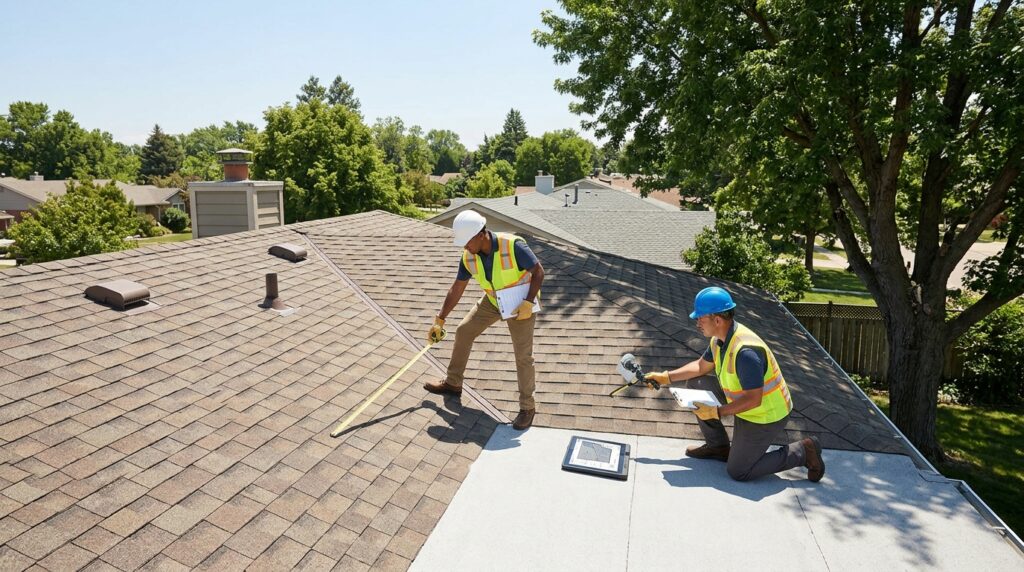
Evaluate energy needs: The site assessment
A professional solar system installation services assessment is the foundation of a reliable energy setup, translating raw energy usage into a precise technical blueprint. Engineers from Green Solar Energy Tech Limited conduct this detailed evaluation of household or business energy consumption patterns to map daily power demands.
During this physical walkthrough, the engineering team evaluates critical site factors:
- Specific load requirements: Cataloging every appliance, from low-draw lighting to high-surge air conditioners, to calculate cumulative power draw.
- Physical roof orientation: Identifying the optimal angles for maximum solar exposure throughout the day.
- Shading obstacles: Mapping nearby trees, structures, or utility poles that could block sunlight and reduce system efficiency.
- Structural integrity: Confirming the roof can safely support the physical weight of the mounting racks and solar panels.
Building a precise load profile is critical because it prevents system undersizing, ensuring the final setup handles the heavy starting currents of inductive loads like pumping machines and refrigerators. Without this baseline data, a system risks frequent tripping or premature battery drain during peak hours. By grounding the design in real-world consumption patterns, the expert team ensures your transition from noisy generators to clean, reliable solar energy is built on accurate data rather than generic estimates.
Engineer the blueprint: Custom system design
- Complete system design translates raw site data into a unified, high-performance electrical and structural schematic.
- Engineers match the electrical characteristics of solar panels with compatible inverter capacities to help manage system performance.
- Engineering calculations account for local thermal conditions, selecting components that maintain high power output even during peak afternoon heat.
- Structural layouts specify the precise tilt angles and mounting hardware required to secure the solar array against regional wind loads.
- Electrical schematics define the correct cable sizing and protective switchgear to ensure safe, continuous power distribution.
This checklist is complete when the engineering team finalizes the custom schematic and issues the bill of materials for the solar project management phase.
System design approaches
| Design approach | Primary purpose | Performance under thermal stress | Long-term reliability | How to choose |
|---|---|---|---|---|
| Custom-engineered system | Maximizes energy yield by matching components to specific site conditions and local heat profiles | High, because temperature coefficients are factored into component matching | High, as balanced electrical loads prevent premature component wear | Choose this option for homes, businesses, and institutions. |
| Individual component assembly | Lowers initial procurement barriers by allowing piecemeal purchasing of standard parts | Variable, as mismatched panels and inverters often suffer from high thermal degradation | Lower, because unmatched components can cause system bottlenecks and accelerated degradation | Choose this option for basic, low-load backup setups or other configurations as assessed. |
Execute the physical setup: Professional installation

- Mount the structural racking. The installation team secures heavy duty aluminum rails directly to the roof rafters or ground mount foundations, establishing a base for the system. This step provides the structural alignment required to maximize sunlight exposure.
- Secure the solar modules. The installation team clamps premium photovoltaic panels onto the racking system, ensuring each module is locked down without cutting corners on quality. This creates the physical harvesting surface that converts solar radiation into direct current electricity.
- Lay the heavy duty DC cabling. Technicians route specialized, weather resistant cables from the rooftop array to the power room, using protective conduits to prevent degradation from intense heat and moisture. This step establishes a secure path for power transmission.
- Integrate the power distribution panel. The engineering team mounts the inverter, charge controllers, and battery banks, connecting them directly into a centralized distribution board. This centralizes system management, allowing the technology to solve the power problem by automatically balancing solar generation, battery storage, and building loads.
- Commission the system. Engineers perform insulation resistance tests, verify voltage levels, and activate the system to deliver clean, reliable solar energy. This final step transitions the property toward energy independence, completing the physical setup and commissioning process.
Secure long term performance: Post-installation support
Professional solar system installation services deliver immediate energy independence, but long-term reliability requires structured after-sales support. Comprehensive technical oversight transitions a newly installed system into a permanent, high-yielding asset that consistently replaces expensive generator use.
Critical Operational Limit: Remote performance monitoring requires a stable local internet connection. If a site lacks continuous network coverage, technical teams must perform physical data logging during scheduled visits to verify system health.
Scheduled maintenance protocols protect the hardware investment and ensure continuous, reliable power delivery. Specialist technical teams execute these protocols to keep the system operating at peak generation efficiency.
- Routine health checks: Technical teams perform scheduled diagnostic scans of the inverter parameters, cable connections, and safety switchgear to help identify potential electrical faults.
- Battery calibration: Technical teams verify battery state-of-charge calibration, balancing individual cells to prevent premature capacity degradation and secure the maximum operational lifespan of the storage bank.
- Panel cleanliness: Regular removal of dust, soot, and debris from the photovoltaic surface prevents shading losses, keeping energy generation at optimal levels.
For businesses seeking solar power systems across Nigeria, these structured support protocols ensure operational stability. Regular maintenance minimizes downtime, allowing commercial enterprises to bypass variable grid conditions and run operations productively without relying on noisy generators.
Assess structural readiness: The physical site requirements
A successful solar installation requires a structurally sound environment before any physical setup begins. The primary prerequisite is an unobstructed roof space or ground area that receives direct sunlight, free from the shade of nearby trees or adjacent buildings. For roof mounted systems, the underlying structure must be capable of supporting the weight of the mounting racks and solar panels without sagging.
If the existing roof timber shows signs of decay or structural weakness, these issues must be fully repaired before the installation team arrives. Furthermore, the electrical service panel of the property must have sufficient physical space and capacity to integrate the new solar circuit breakers.
When a roof is heavily shaded throughout the day or lacks the structural integrity to support additional weight, a standard roof installation is not the correct approach, and alternative ground mounted options must be evaluated instead.
Prepare the property: The pre-installation checklist
A successful one day solar installation requires specific physical preparations before the engineering team arrives on site. Property owners must clear a direct path to the main distribution board and ensure the designated battery storage area is clean, dry, and well-ventilated. The installation crew requires unobstructed access to the roof, which means removing any temporary structures or debris from the perimeter of the building. Securing these physical conditions beforehand prevents operational delays and allows the technical team to focus entirely on mounting the solar panels and configuring the inverter system.
FAQ
What primary factor determines whether a home is ready for a solar installation?
The completion of a professional site assessment is the deciding factor, as engineers must first map the physical roof space and verify that the existing electrical distribution board can accept power inputs.
Why do residential solar systems experience premature battery bank degradation under hot climate conditions?
The primary failure mode stems from inadequate ventilation in the battery storage area, which allows high ambient temperatures to accelerate internal chemical breakdown and permanently reduce the energy storage capacity.
Can a standard commercial solar design integrate directly with an existing diesel generator setup?
Yes, professional system designs are engineered to integrate with existing backup generators, utilizing specialized transfer switches that allow the solar array to operate as the primary power source while keeping the generator as a secondary reserve.
How does a professional solar system installation differ from a basic component assembly?
A professional installation delivers a custom engineered system designed from scratch by engineers to match specific load requirements, whereas basic component assembly simply connects pre-packaged parts.